Our policy on the use of artificial intellegence
So... What about a.i.?
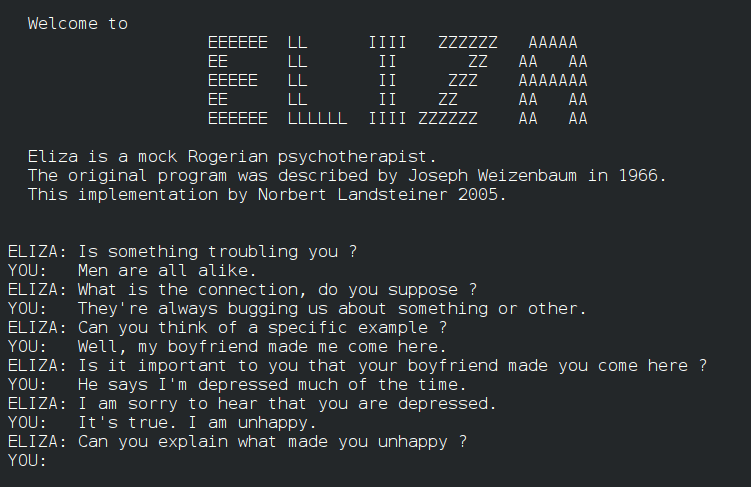
The first historical example of generative AI was called ELIZA, created in 1961 by Joseph Weizenbaum. ELIZA was a talking computer program that would respond to a human, using a natural language and responses designed to sound empathic. After years of technological advancements, AI has become a staple in many peoples lives, whether through email assistance, engineering, etc. In November of 2022, OpenAI introduced ChatGPT, a generative AI combined with large language models. ChatGPT, and its variations, have achieved a new level of artificial intelligence. These “smarter chatbots” can perform research, support reasonably good writing, and generate realistic videos, audio, and images, but they can also be extremely detrimental to cognitive growth, boundaries, patience, and the environment...






They Followed The Money...
☠︎
In recent months, MAJOR ai companies HAVE DRASTICALLY shifted THEIR GOALS FROM EXPERIMENTAL, GENERATIVE CHAT BOTS TO autonomous integration within defense, security, and physical infrastructure, to FOLLOW REVENUE STREAMS. In 2025 alone, generative ai produced roughly as much CO2 emissions into the atmosphere as New York City annually. ai is being used daily to harm, marginalize, and, Even when used properly, the environmental toll is clear. this is why everything you see on this site, within our documentation packages, agreements, and courses is in our own words using our own thoughts. and we expect the same from you.
In a UNICEF, ECPAT and INTERPOL study across 11 countries, at least 1.2 million children disclosed having had their images manipulated into sexually explicit deepfakes in the past year. In some countries, this represents 1 in 25 children – the equivalent of one child in a typical classroom.
https://www.unicef.org/press-releases/deepfake-abuse-is-abuse
Human Rights Watch and other humanitarian leaders have called out a number of nations who have used AI in their defense systems in recent conflicts, often targeting civilians with no time allocated for human verification
https://www.theguardian.com/world/2024/apr/03/israel-gaza-ai-database-hamas-airstrikes?CMP=share_btn_url
The Internet Watch Foundation said it identified a 260-fold increase in childhood sexual exploitation videos due to AI, with the majority of videos showing the most extreme type of content, according to a safety watchdog.
https://www.theguardian.com/technology/2026/mar/24/ai-generated-child-sexual-abuse-videos-images-online-surged-2025-internet-watch-foundation
Between October 2023 and February 2024, approximately 11,000 English nouns associated boundaries, decision-making, memory, and identity dropped in usage by more than 80% due to AI.
https://www.kraabel.net/the-silent-erosion-of-language-in-the-age-of-algorithmic-curators/
In June 2025, OpenAI was awarded a contract valued at up to $200 million to provide the U.S. Defense Department with "prototype frontier AI capabilities" for national security, warfighting, and enterprise tasks.
https://www.reuters.com/world/us/openai-wins-200-million-us-defense-contract-2025-06-16/
Bodies of water such the Rio Grande in parts of Mexico and the US, as well as the Ceará State in Brazil are facing severe water shortages, as Datacenters use vast amounts of energy and water to cool their supercomputers, often times 60 - 80% of what is available, accelerating local droughts by consuming millions of gallons of water daily
https://www.theguardian.com/global-development/2025/may/22/datacentre-drought-chinese-social-media-supercomputers-brazil-latin-america
. Technologies like Clearview AI have enabled mass surveillance and identification through facial recognition, without proper oversight or consent. The risk of significant harm includes algorithmic bias in policing, unlawful data collection, and potential digital authoritarianism.
https://www.priv.gc.ca/en/opc-actions-and-decisions/investigations/investigations-into-businesses/2021/pipeda-2021-001/
A Stanford study revealed that leading AI companies are pulling user conversations for training, highlighting privacy risks and a need for clearer policies. Six major AI companies employ users’ chat data by default to train their models, and some developers keep this information in their systems indefinitely.
https://hai.stanford.edu/news/be-careful-what-you-tell-your-ai-chatbot